Contents
For a developer, pre-sales are decisive. The first sales reassure the bank, fund part of the works and create momentum: a project that sells attracts other buyers.
But in Morocco as elsewhere, convincing someone to pay for a home that exists only on paper takes method. Here is the one we see working in the field.
The legal framework for off-plan sales
In most countries, off-plan sales are governed by specific legislation: known as VEFA (vente en l'état futur d'achèvement, or off-plan sale) in French-speaking countries and as "off-plan" sales in English-speaking countries and the Middle East. This framework protects the buyer and, used well, is also a selling point for the developer.
The exact rules vary from country to country, but the same broad principles almost always apply:
- A written, regulated contract. The sale generally goes through a reservation or preliminary contract, then a final contract, drafted or validated by an authorized professional.
- Staged payments. The buyer pays in installments tied to the actual progress of the works, not all at once.
- Guarantees. The developer must often provide guarantees that protect the buyer if the project fails, or place the funds in an escrow account.
- Mandatory information. The contract precisely describes the property, its area, its equipment and the delivery deadline.
What interests us here is the commercial consequence: the buyer commits on the basis of a description. The clearer and more visual that description, the more confidently they sign, and the fewer disputes there are at handover.
The real obstacle: the buyer sees nothing
A 2D plan, an area in m² and a brochure with a single perspective are not enough. Most buyers cannot read an architect's plan. They visualize neither the volumes, nor the light, nor the view.
Result: they hesitate, compare, and put off their decision “until we see the structure”. Some end up buying in an already delivered project, from a competitor, simply because they could visit it.
The questions that block the decision are almost always the same:
- “Will the living room really be bright?”
- “What will we see from the balcony?”
- “Will our furniture fit?”
- “Will the residence be as beautiful as in the brochure?”
- “Is the site really moving forward?”
Each tool presented below answers one or more of these questions.
The visual tools that sell
| Tool | What it is for | Question it answers |
|---|---|---|
| Exterior and interior 3D renders | Brochure, signage, listings, social media | “What will it look like?” |
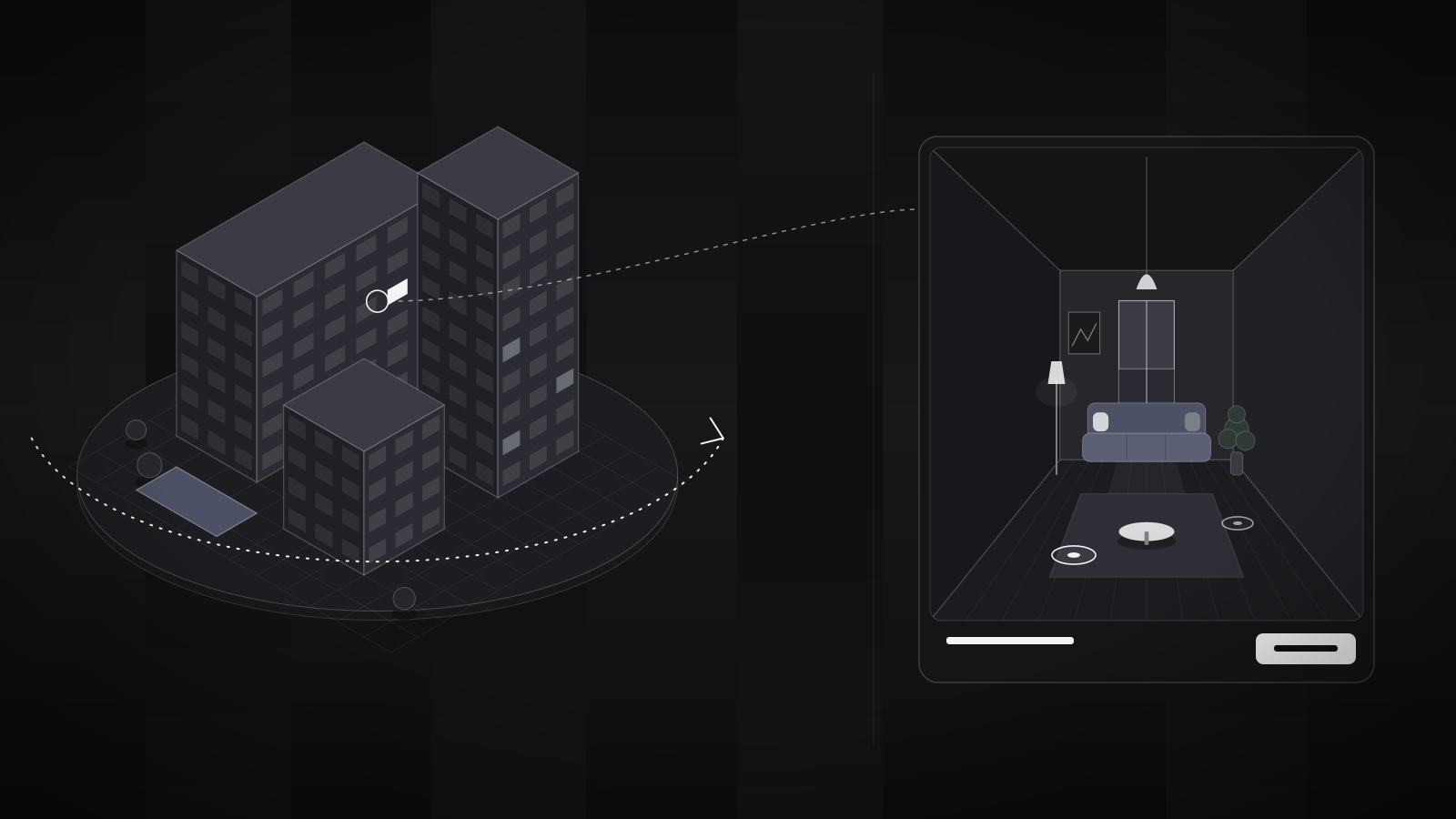
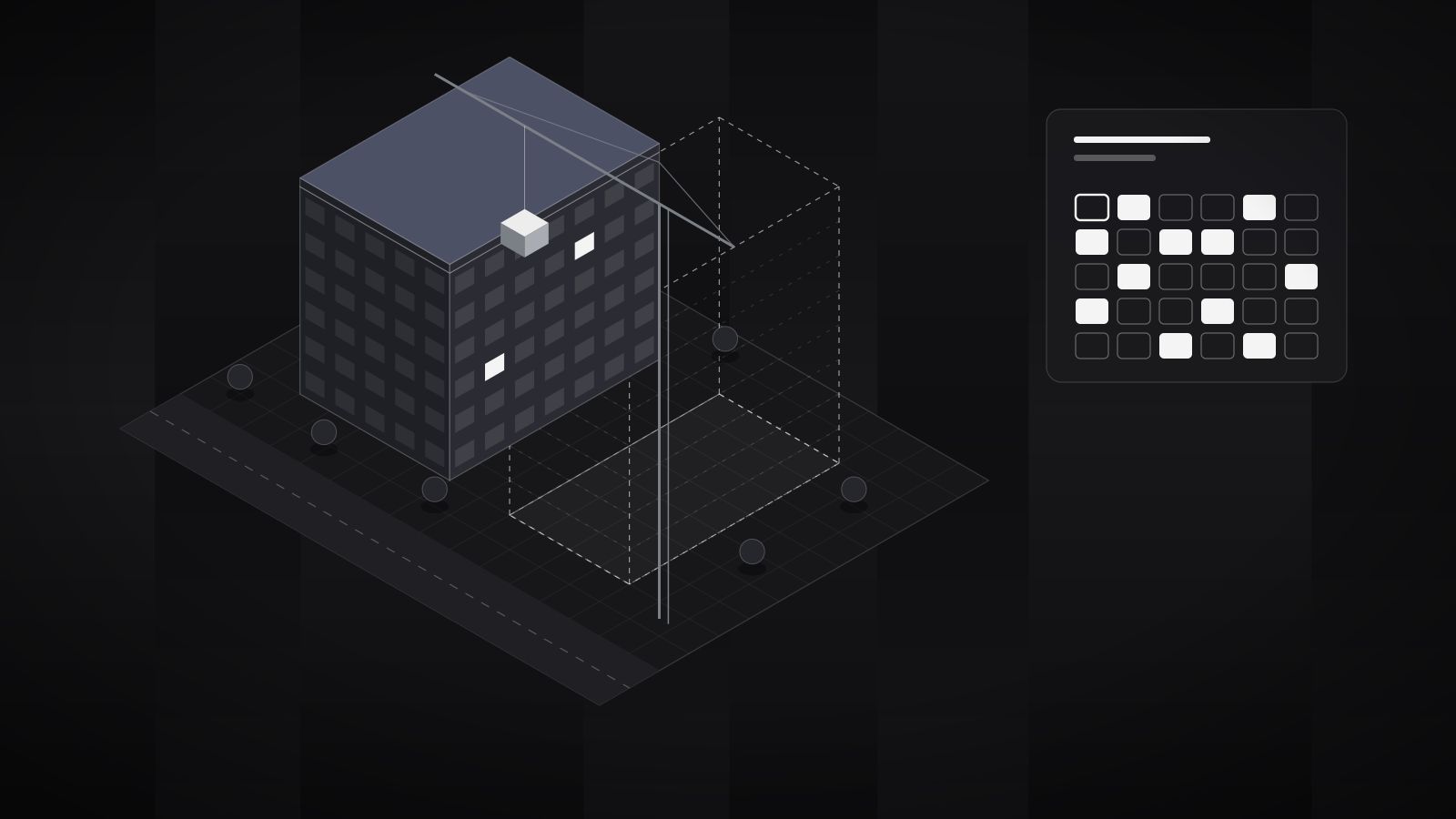
| Interactive orbital model | Choose a unit, see the orientation and availability | “Which apartment should I choose?” |
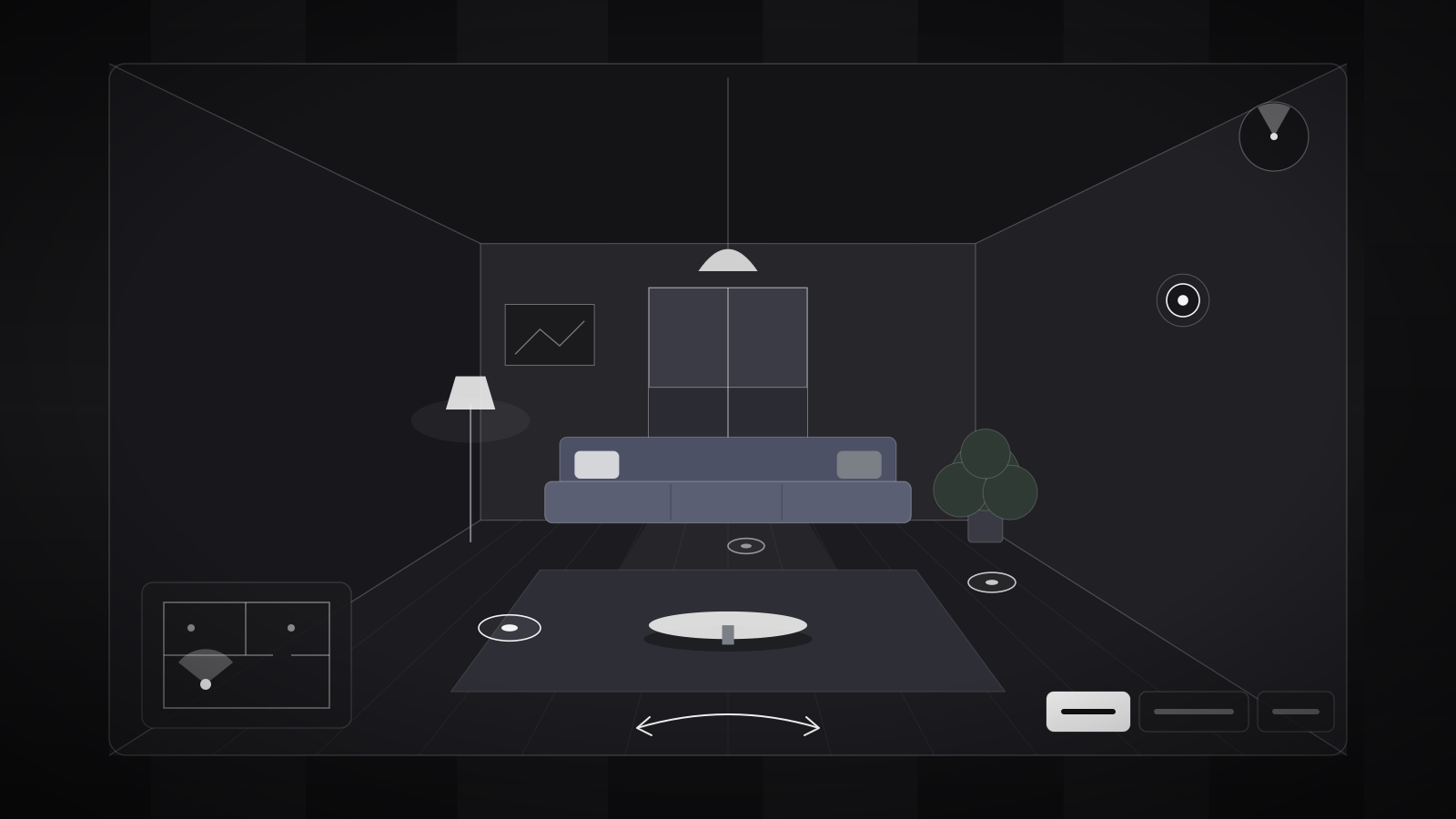
| 3D virtual tour from plans | Step inside the home, see the volumes and the light | “Can I see myself living here?” |
| 360° panorama from the actual site | Showing the real view from a given floor, captured by drone | “What will we see from the balcony?” |
| 3D sales plans | Understanding the layout and placing furniture | “Will my furniture fit?” |
| 3D animated film | Launch, trade fairs, online advertising | “Is this a project that makes me dream?” |
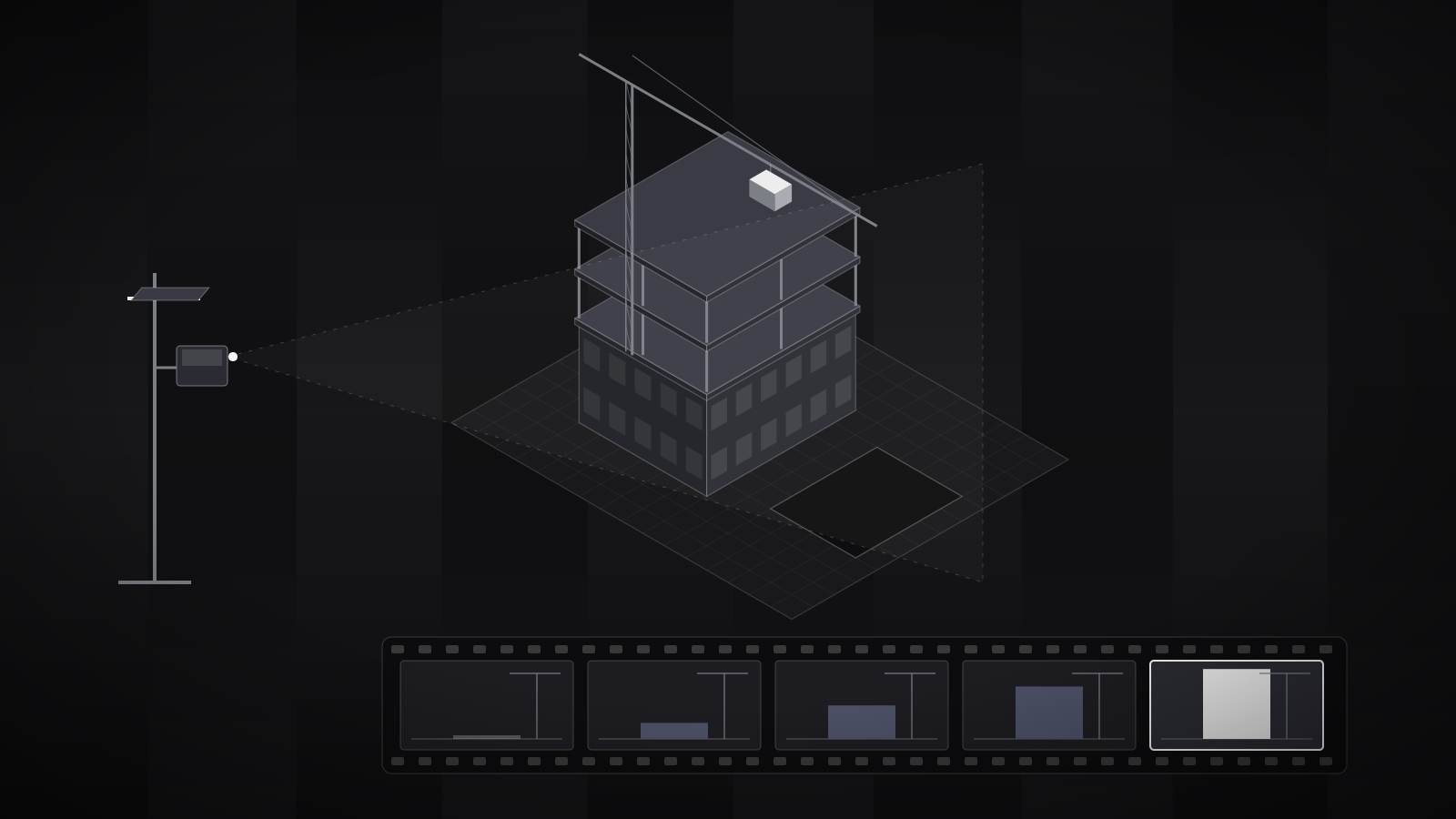
| Time-lapse and site monitoring | Proving progress to buyers | “Is the site really moving forward?” |
| Development website + CRM | Centralize everything and track every prospect | “Where can I find all the info, and who will call me back?” |
The launch plan in 6 steps
- Prepare the offer (3 to 4 months before launch). Freeze the unit types, the price list, the finishes and the schedule. This is the basis for all visuals: changing a plan after the 3D render costs time and money.
- Produce the visuals (2 to 3 months before). 3D renders, orbital model, virtual tour of the key unit types, sales plans. Start from a single 3D model to keep perfect consistency across all materials.
- Set up the website and CRM (1 to 2 months before). A website dedicated to the program, with visuals, availability and a form, linked to a CRM that records every inquiry. Without a CRM, prospects get lost between the sales team's phones and WhatsApp messages.
- Open a waiting list (1 month before). Share a few visuals on social networks and portals, without revealing everything. Invite interested people to sign up for priority access to the best units.
- Launch officially. Event at the sales office, online campaign, presence at a trade show. The first registrants are contacted before anyone else. The orbital model displays reserved units live.
- Keep the momentum going during construction. Regularly publish site images, a construction time-lapse, drone views. Each new stage (foundations, structure, facades) is an opportunity to re-engage hesitant prospects.
Reach remote buyers (Moroccans abroad, expats, foreign investors)
For many developments, a significant share of buyers live far from the project: Moroccans living abroad, expats, international investors. Their problem is simple: they cannot come and visit when they want. To convince them remotely:
- Make the project visitable online. The virtual tour and the orbital model replace the sales office visit.
- Offer video appointments. A salesperson presents the project by sharing their screen, navigating the model with the client and their family.
- Use WhatsApp wisely. A link to the tour, a plan, a short video: everything is shared in one message and circulates within the family.
- Speak their language. A website and materials in French, English, even Arabic or Spanish, considerably widen your audience.
- Prove the site is progressing. For someone buying thousands of kilometers away, a time-lapse or regular photos are worth more than any speech.
- Plan around their periods of presence. Many remote buyers close during their stays, often in summer. The online courtship must start well before they arrive.
The most common mistakes
- Launching with a single perspective. A facade image doesn't sell an apartment. The buyer needs to see the interior.
- Visuals too good to be true. A sea view that doesn't exist, inflated green spaces: the disappointment at handover is costly in reputation, even in disputes. Visuals must stay faithful to the real project.
- Not following up on prospects. A contact who isn't called back within 24 hours is often a lost contact.
- Out-of-date availability. Nothing irritates a client more than falling for an apartment that has already been sold.
- Betting everything on the launch. Marketing often lasts for the entire construction period. You need to plan content for that whole time.
- Changing the plans after the visuals. Every change forces you to redo the renders, the tour and the sales plans.
To budget for the immersive part, see our benchmarks on the cost of a 360° virtual tour.
Frequently asked questions
When should you order 3D visuals?
As soon as the plans are stabilized, ideally two to three months before the commercial launch. Earlier, the plans may still change. Later, you launch without tools.
What budget should you plan for visual communication?
It depends on the size and standing of the program. Relative to total revenue, the cost of 3D visuals and the website generally remains a small fraction, to be compared with the cost of a physical show apartment or several months of slow sales.
Are 3D images contractually binding?
No. It is customary to state that they are “non-contractual”. The sales contract, for its part, describes the property precisely. This does not remove the need to stay faithful to the actual project.
Do you need to order everything at launch?
No. 3D renders, a dedicated website and an orbital model or a virtual tour are enough for a good launch. The time-lapse, drone views and film support the life of the development.
Can you support a project outside Morocco?
Yes. 3D renders, orbital models, virtual tours, websites and CRM are produced entirely remotely, for developers in Morocco and internationally.
In summary
Selling before construction means selling trust. The legal framework for off-plan sales reassures the buyer about their payments. Visual tools reassure them about what they are buying. And rigorous lead tracking turns that trust into reservations.
Grapheva supports developers in Morocco and abroad across the whole chain: 3D renders, orbital model, virtual tour, website, CRM and site monitoring.