Contents
A time-lapse is often associated with the sped-up video published at the end of construction. That is true, but it is far from its only value. For a developer, a client or a general contractor, it is first of all a management and communication tool.
Here is why more and more construction sites, in Morocco and elsewhere, are equipped with one, and what to plan for a successful installation.
How a construction time-lapse camera works
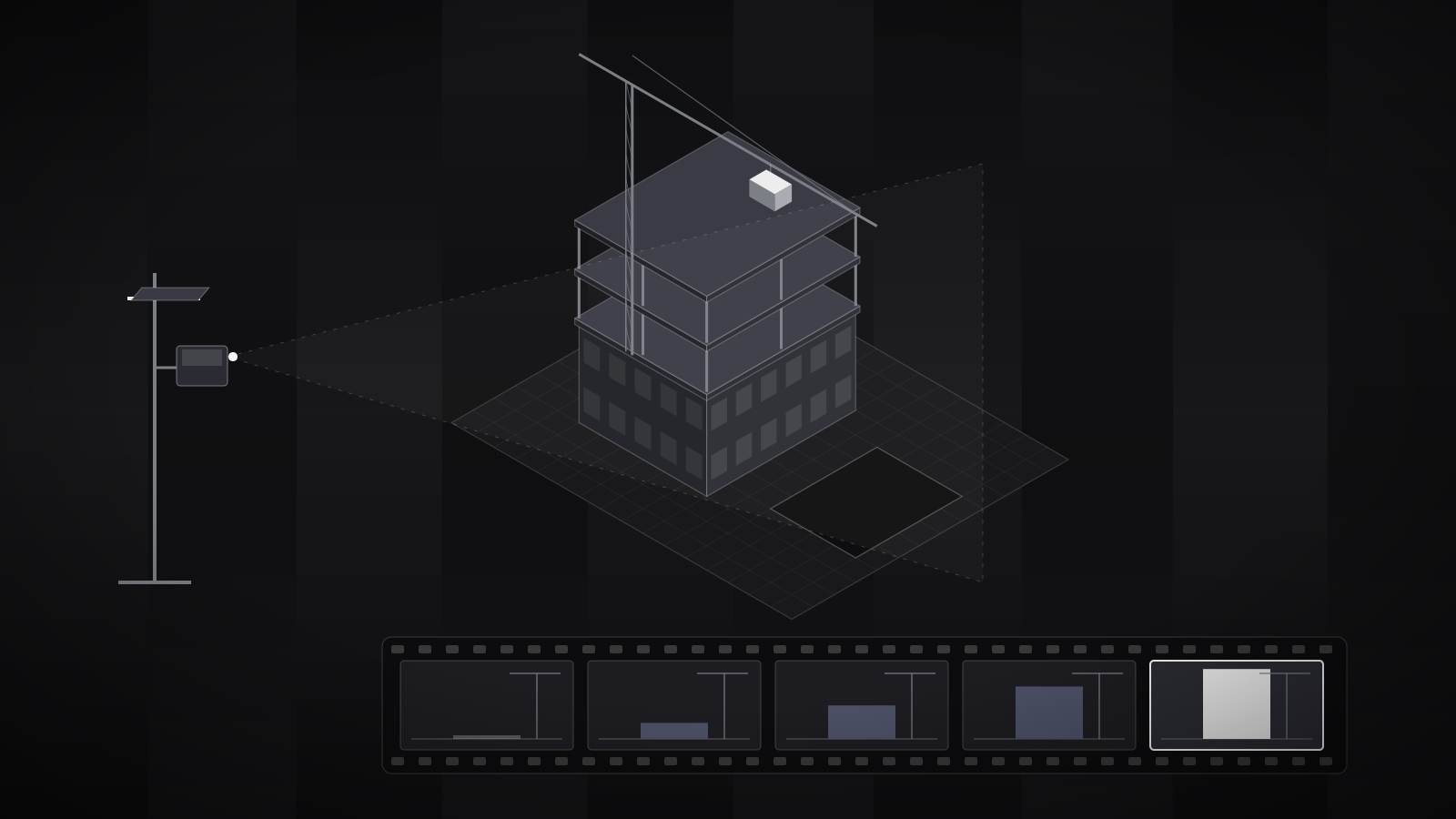
A high-definition camera is mounted high up, on a neighboring building, a mast or the crane, with a clear view of the site. It automatically takes a photo at regular intervals, for example every 10 or 15 minutes, during working hours.
Photos are sent over a mobile connection (4G) to an online platform. From a computer or a phone, you can then:
- see the latest image of the site;
- go back in time day by day, even hour by hour;
- compare two dates side by side;
- download images for a report or a publication;
- generate sped-up videos of a given period.
The camera is generally powered by the site's electrical supply or by a solar panel, very practical in sunny regions. It runs autonomously for months, even years.
7 good reasons to install one
- Follow the site without going there. A project director managing several sites in different cities, even different countries, sees at a glance where each one stands, without spending the week on the road.
- Reassure off-plan buyers. For a program sold off-plan, regularly showing progress is the best answer to the buyer's concerns. This is even truer for those buying from abroad. See our method for selling a real estate project before construction.
- Keep investors and banks informed. Financial partners follow progress through dated images, without waiting for the next report.
- Keep evidence in case of dispute. A dated photo shows what was done, when, and in what weather conditions. It is valuable in case of disagreement over a deadline or a snag.
- Improve organization. By replaying days in fast-forward, you spot idle time, delivery bottlenecks and poorly organized areas.
- Strengthen security. The camera is a deterrent and lets you check what happened on site.
- Create unique marketing content. The final film, showing an empty plot become a residence in a few dozen seconds, is one of the most shared pieces of content on a developer's social networks. It also serves for later programs: it is proof that you deliver.
Time-lapse, 360° or drone: complementary tools
| Tool | Viewpoint | Frequency | Ideal for |
|---|---|---|---|
| Time-lapse camera | Fixed, overview | Several times an hour | Continuous monitoring, final film, dated proof |
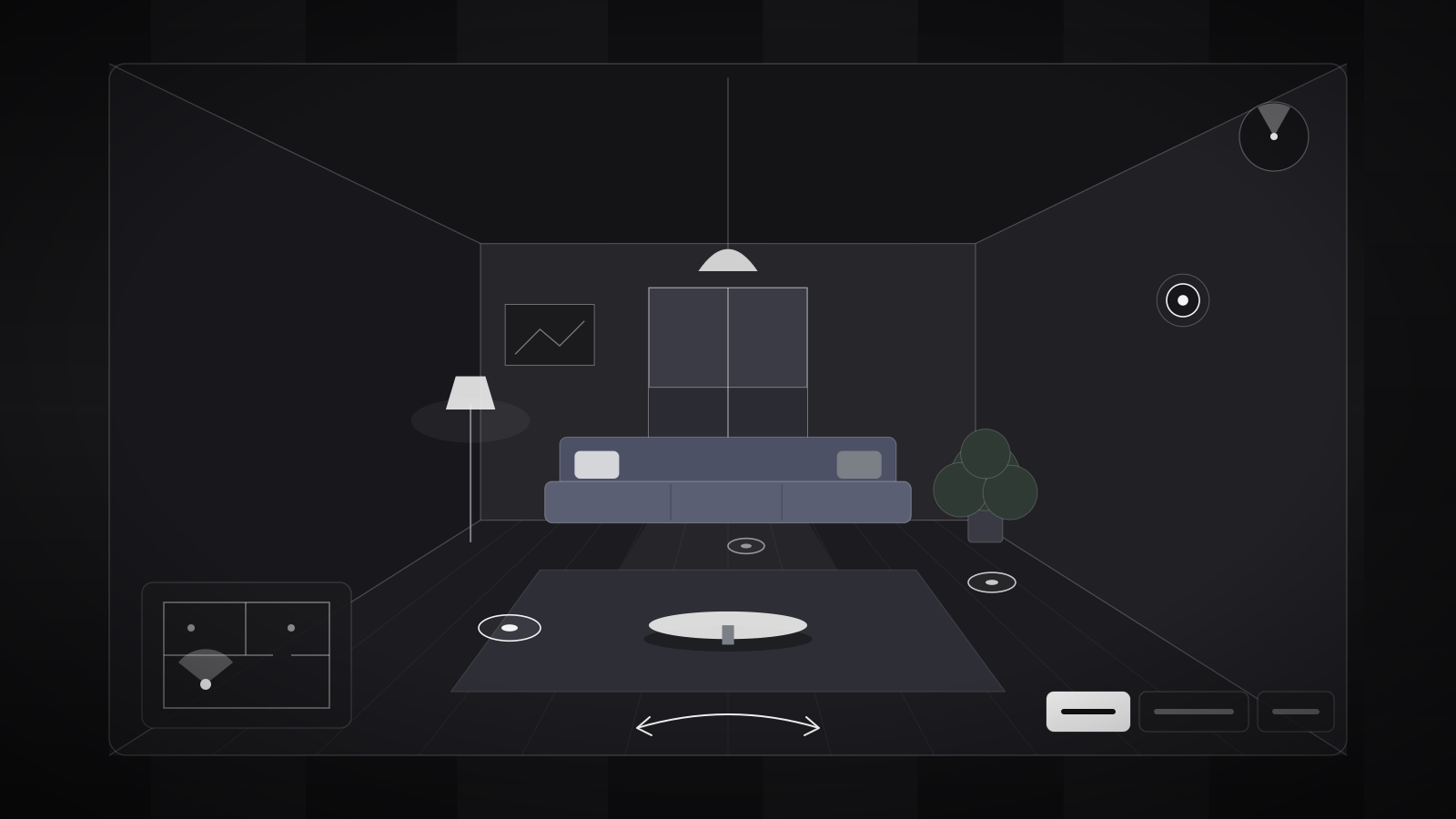
| 360° monitoring | Interior, room by room | Weekly or monthly | Checking utilities before partitions are closed, snag lists |
| Drone | Aerial, mobile | One-off (key milestones) | Overview, communication, surveys |
The time-lapse shows the site as a whole, continuously. 360° monitoring goes inside the building and lets you see, for example, where the ducts run before the partitions are closed. The drone provides spectacular views and surveys at each key stage.
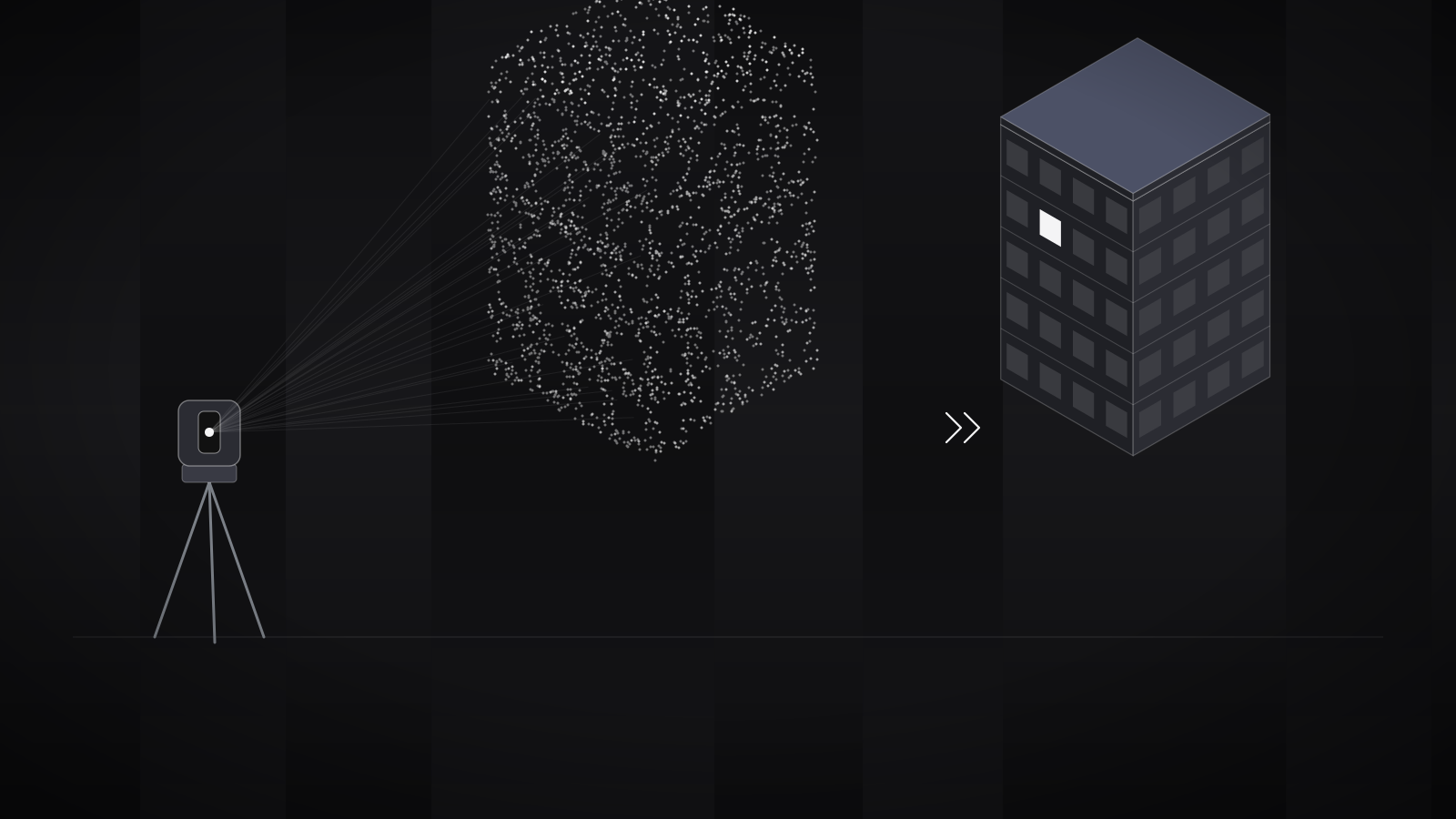
On a large project, combining the three provides a complete record of the site, outside and inside. To go further in checking what was built, laser scanning and scan-to-BIM make it possible to compare the actual structure with the model.
Installation: what to plan for
- The right location. A high, stable point with a view over the whole site, which won't be hidden by the building under construction. A neighboring building (with the owner's consent), a dedicated mast or the crane is often chosen.
- Power supply. Connection to the site distribution board, or a solar panel with battery.
- Connectivity. Good 4G coverage at the chosen spot, to be checked before installation.
- Framing and frequency. They are set from the start and stay identical until the end, for a smooth final film.
- Installation from the start. For a spectacular film, the camera must be in place before excavation. Once the foundations are poured, the "empty plot" effect is lost.
- Platform access. Who sees the images? Management, the sales team, the bank, buyers? Each person's rights are defined.
- Privacy. The framing must focus on the site and avoid filming neighbors' windows or gardens, in line with the country's data protection rules.
Budget and timeline
The cost of a construction time-lapse generally includes:
- installation and commissioning of the camera;
- a monthly fee covering the camera, the connection, image hosting and maintenance;
- editing of the final film, and possibly interim films for communication;
- removal at the end of the project.
The total budget depends mainly on the length of the project, the number of cameras and the complexity of the installation. Compared with the total cost of a real estate project it remains very low, and it compares favorably with the travel time saved and the value of the content produced.
As for duration, the camera stays in place from earthworks to handover: from a few months for a villa to two or three years for a large residence.
Frequently asked questions
What happens in case of a power or connection outage?
Professional cameras store images internally and send them as soon as the connection returns. The battery takes over during a power cut.
Does the camera withstand heat and dust?
Site equipment is designed for outdoor use: waterproof housing, protection against dust, rain and extreme heat. The lens is cleaned during maintenance.
Can the images be shared with buyers?
Yes. A recent image or video can be embedded on the development's website, or site updates can be sent regularly by email and WhatsApp.
How long is the final film?
Generally 30 seconds to 3 minutes. Long enough to show the whole transformation, short enough to be watched to the end on social media.
Can you edit a film from images of a site abroad?
Yes. Editing and post-production are done remotely, from the images sent by the camera or by the on-site team.
In summary
A construction time-lapse is at once a monitoring tool, insurance in case of dispute and a great communication tool. The best time to install it is before the first shovel hits the ground.
Grapheva installs and manages HD time-lapse cameras on construction sites in Morocco, and complements monitoring with 360° monitoring, drone footage and photo and video reports. Editing and post-production are also available for international sites.