Contents
On real estate portals, in Morocco as elsewhere, a listing is won or lost in a few seconds. The prospect scrolls through dozens of photos on their phone. An empty living room with white walls, a bedroom cluttered with boxes or a new apartment with no furniture at all: they move on to the next listing.
This guide shows what virtual home staging concretely changes, and how to calculate whether it pays off for your properties.
What is virtual home staging?
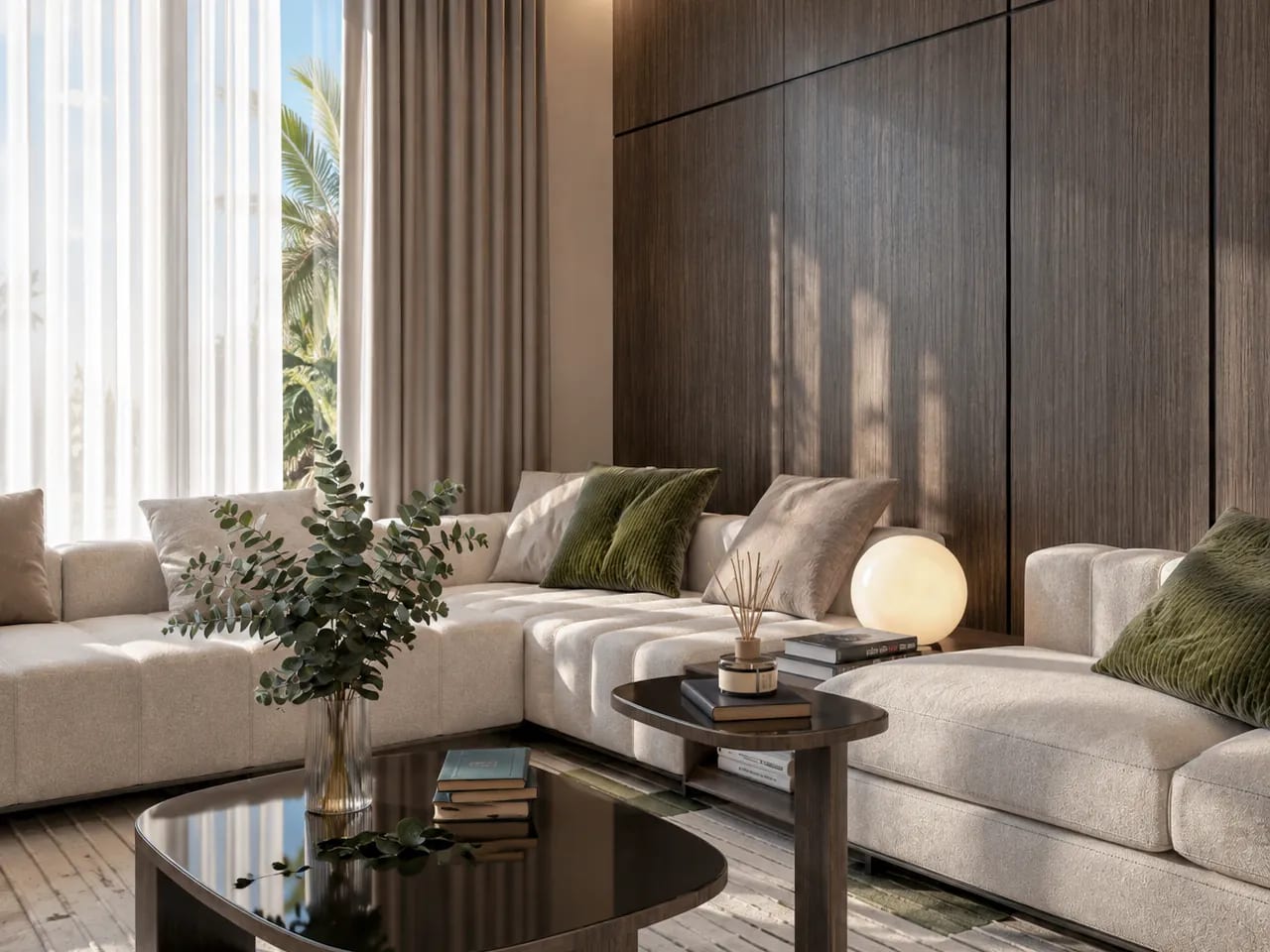
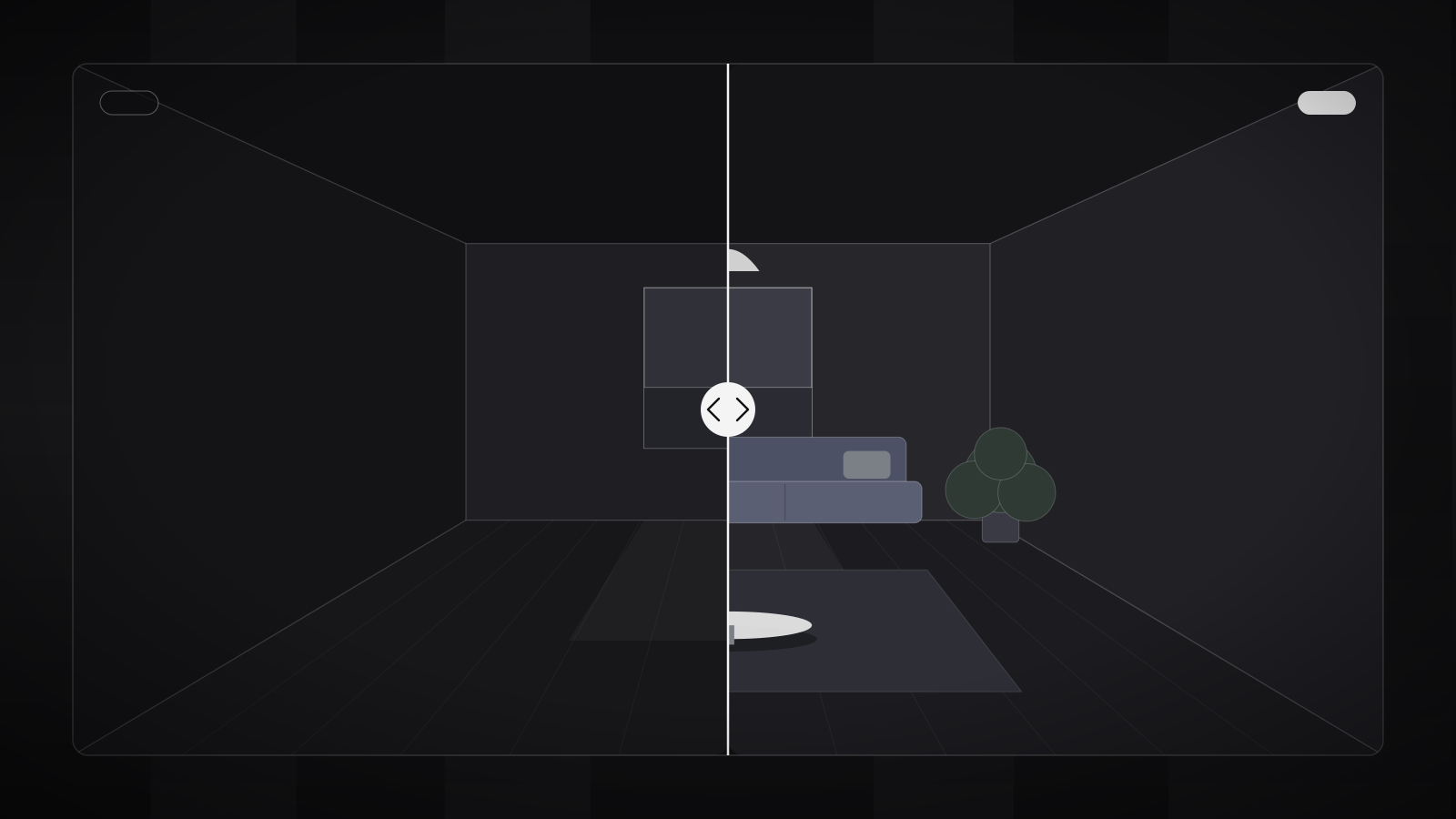
We start from photos of the property, or from 3D renders if it is not yet built. A 3D artist then adds furniture, rugs, light fixtures, plants and decoration in computer-generated images. The result is a realistic photo of a warm, furnished interior.
You can go further than simple furnishing:
- Empty a room cluttered with old furniture or personal belongings, before refurnishing it.
- Virtually refresh the walls, floors or kitchen, to show the potential after renovation.
- Offer several styles for the same space: modern, contemporary, Moroccan, Scandinavian, classic, depending on the target clientele.
- Give a function to an ambiguous room: that small room becomes an office, a child's bedroom or a dressing room.
Everything is done remotely, without moving a single piece of furniture, in a few days, whatever country the property is in.
Before / after: 4 typical situations
1. The empty new apartment
Before White walls, tiled floor, a window. Impossible to judge the volumes.
After A modern living room, a dining table, warm lighting. The buyer finally sees that the living area fits a large sofa and a table for six.
2. The cluttered older apartment
Before The owner's furniture, heavy curtains, objects everywhere.
After The room virtually cleared and refurnished in a restrained style. The property feels larger and brighter.
3. The villa to renovate
Before A 1990s kitchen, damaged flooring.
After A simulation of an open kitchen and new flooring. The buyer no longer sees renovation work, they see potential.
4. The retail unit or office floor
Before A bare, grey open floor.
After A furnished workspace, or a shop with its display units. The company or retailer immediately understands how they could occupy it.
Virtual or physical home staging?
| Criterion | Virtual home staging | Physical home staging |
|---|---|---|
| Cost | Per image, no furniture rental | Furniture rental or purchase, transport, installation |
| Timeline | A few days | Several days to several weeks |
| Possible styles | Several styles for the same space | Only one at a time |
| Off-plan property | Possible, from the 3D renders | Impossible |
| On-site visit | The property stays empty | The property is furnished |
| Ideal for | Online listings, social media, off-plan sales, remote properties | High-end properties visited in person |
The two are not opposed. Virtual staging generates viewings through attractive listings. Physical staging can then take over for very high-end properties where the on-site experience is decisive. For a property the buyer must be able to explore remotely, the 360° virtual tour is the natural complement.
Calculating the return on investment
Virtual home staging pays off if it earns more than it costs. It can earn in two ways: by shortening the time to sale, and by limiting price negotiation.
The formula to remember
Return on investment = (price gain + savings on time to sale − cost of home staging) ÷ cost of home staging
For a real estate agency, there is a third gain: better-looking listings generate more leads, strengthen the agency's image and help win new mandates. An owner is more likely to choose the agency that showcases their property.
The golden rules, and transparency
A successful virtual home staging makes people want it without misleading them. A few simple rules:
- State clearly that the image is virtually staged, with a discreet note on the photo or in the listing. In some countries and on some portals, it is even mandatory.
- Never hide a defect: a crack, damp, a blocked view. The buyer will discover it at the visit, and trust will be lost.
- Respect real dimensions: a sofa at the right scale, not miniature furniture that artificially enlarges the room.
- Adapt the style to the target clientele: a student studio is not furnished like a holiday villa or a family apartment.
- Start from good photos: home staging can't rescue a blurry, dark or poorly framed photo. A professional photo shoot is often the best initial investment.
- Keep the original photo in the listing, so the buyer knows exactly what they are going to visit.
For a new development, virtual home staging is part of a broader strategy: see our guide on selling a real estate project off-plan.
Frequently asked questions
How many photos need to be processed?
Focus on the rooms that sell: the living room, the main bedroom, the kitchen and, if there is one, the terrace. Four to six images are often enough for a listing.
How quickly are the images delivered?
Generally within a few working days of receiving the photos, depending on the number of images and corrections.
Can you do virtual home staging on a property that is not yet built?
Yes. We then start from the 3D renders of the project. It is very useful for off-plan sales, combined with a virtual tour.
Should you flag that a photo has been virtually staged?
Yes, it is good practice: a discreet note on the photo or in the listing. In some countries and on some portals, it is even mandatory.
Are photos taken with my phone good enough?
It depends on their quality. Sharp, well-lit photos taken at eye level with a wide-angle lens can work. For a truly professional result, a dedicated photo shoot is better.
Do you work on properties located outside Morocco?
Yes. Just send us the photos: virtual home staging is done entirely remotely.
In summary
Virtual home staging turns a photo that puts people off into a photo that makes them want to visit. For a modest cost, it can reduce the time to sale and the negotiation, as long as you stay honest about what is shown.
Grapheva carries out 3D virtual home staging of your existing properties and off-plan programs, in Morocco and abroad, along with the photo shoots and virtual tours that go with it.